Desert Landscaping in Dubai: How to Create a Green Landscape That Survives the Heat
Every summer, the same story plays out across Dubai’s villa communities. Gardens that looked lush and perfect in February turn brown, patchy, and half-dead by August. Lawns burn. Imported plants collapse. Water bills climb while the garden declines.
Then there are the other gardens the ones that stay green through 45°C afternoons, look better every year, and don’t demand a fortune in water. The difference isn’t luck, and it isn’t unlimited irrigation. It’s desert landscaping: designing a garden that works with Dubai’s climate instead of fighting it.
This guide explains how desert landscaping actually works, which plants and techniques deliver a genuinely green landscape in the UAE, and the mistakes that kill most Dubai gardens before their second summer.
What Is Desert Landscaping (And What It Isn’t)
Let’s clear up the biggest misconception first: desert landscaping does not mean a garden of gravel, rocks, and three lonely cacti.
Desert landscaping sometimes called xeriscaping is a design philosophy: choose plants adapted to heat and low water, group them intelligently, irrigate precisely, and use hardscape and shade to reduce stress on everything living. Done well, the result is a rich, layered, genuinely green landscape that happens to thrive on a fraction of the water a conventional garden drinks.
Some of the most beautiful gardens in Palm Jumeirah, Arabian Ranches, and Emirates Hills are desert-smart gardens. Their owners’ neighbours often never realise they just wonder why that one garden never turns brown in July.
The Three Pillars of a Heat-Proof Green Landscape
After 15+ years of landscaping architecture in Dubai, we build every climate-smart garden on three pillars.
Pillar 1: The Right Plants in the Right Places
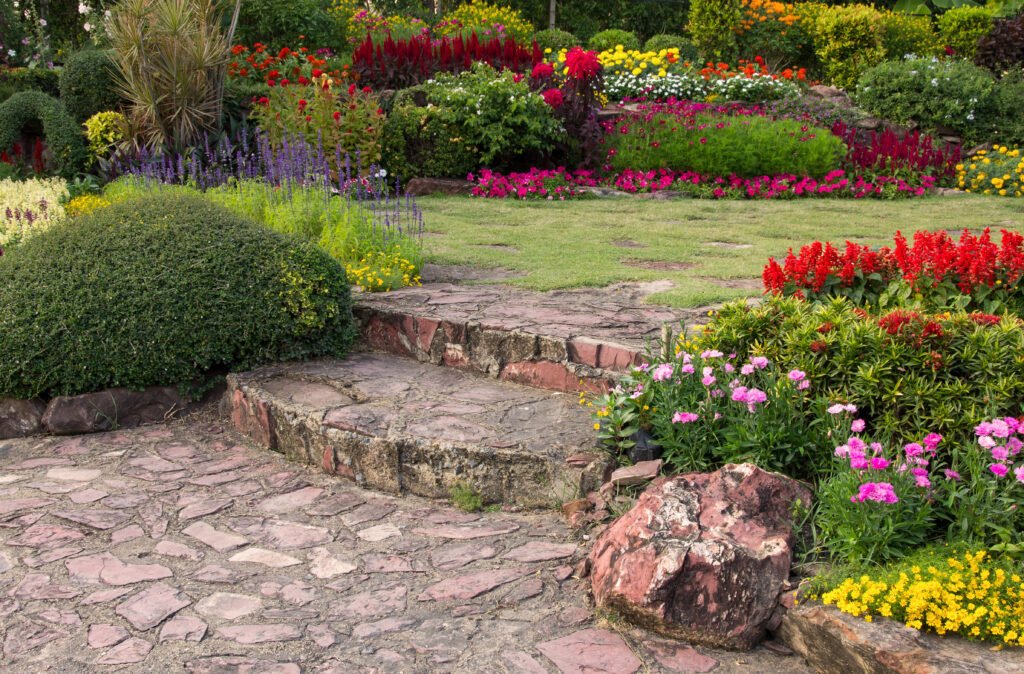
Plant selection is 70% of the battle. Dubai’s combination of extreme heat, intense UV, sandy soil, and occasional salty air rules out most of what fills international gardening catalogues but the palette that remains is far richer than most people expect:
- Trees and palms: date palms, Washingtonia, olive trees, sidr, and ghaf — the UAE’s national tree, famously able to thrive on deep, infrequent watering
- Flowering colour: bougainvillea (the undisputed champion of Dubai colour), desert rose (adenium), oleander, and tecoma — all bloom through heat that kills softer species
- Structure and texture: agaves, aloes, cycads, yuccas, and ornamental grasses that hold their shape year-round with minimal water
- Ground cover: carissa, wedelia, and sesuvium that carpet beds in green and suppress weeds naturally
Placement matters as much as selection. Good gardening design maps your plot’s sun exposure first: the brutal west-facing zones get the toughest species, while shaded courtyard corners can host softer, lusher planting. This is natural landscaping in the truest sense letting the site’s own conditions decide what grows where, rather than forcing a fantasy onto the plot.
Pillar 2: Irrigation That Waters Roots, Not Air
Here’s a number that surprises most villa owners: hose watering and poorly designed sprinklers can waste 40–60% of their water to evaporation and runoff especially when run in the afternoon heat.
Desert landscaping flips the equation with precision irrigation:
- Drip irrigation delivers water directly to each plant’s root zone, drop by drop, with almost zero evaporation loss
- Smart controllers water at dawn, adjust seasonally, and can pause automatically — no more sprinklers running in a rare rainstorm
- Hydrozoning groups plants by water need, so thirsty lawn zones and drought-tough beds each get exactly what they require, never a compromise between the two
- Mulching beds with gravel or organic mulch locks moisture into the soil and keeps root zones cooler
The result is a garden that stays greener on dramatically less water. Many of our clients see meaningful DEWA savings within the first summer of switching from spray-and-pray watering to a designed drip system.
Pillar 3: Design That Creates Its Own Microclimate
The third pillar is where landscaping architecture earns its name. A well-designed garden actually modifies its own climate:
- Shade trees and pergolas drop the temperature beneath them significantly, protecting under-planting and making the garden usable in summer
- Windbreak hedging shields delicate zones from hot, drying winds
- Light-coloured hardscape reflects heat instead of radiating it back at plants all evening
- Water features add localised cooling through evaporation while bringing sound and movement
- Layered planting — tall canopy, mid-level shrubs, low ground cover — means each layer shelters the one below, exactly as desert oases work in nature
Think of it as designing an oasis rather than decorating a plot. That’s the mindset shift that separates gardens that survive from gardens that thrive.
Lawn Strategy: The Honest Conversation
The lawn is where most Dubai gardens win or lose their water budget. You have three honest options:
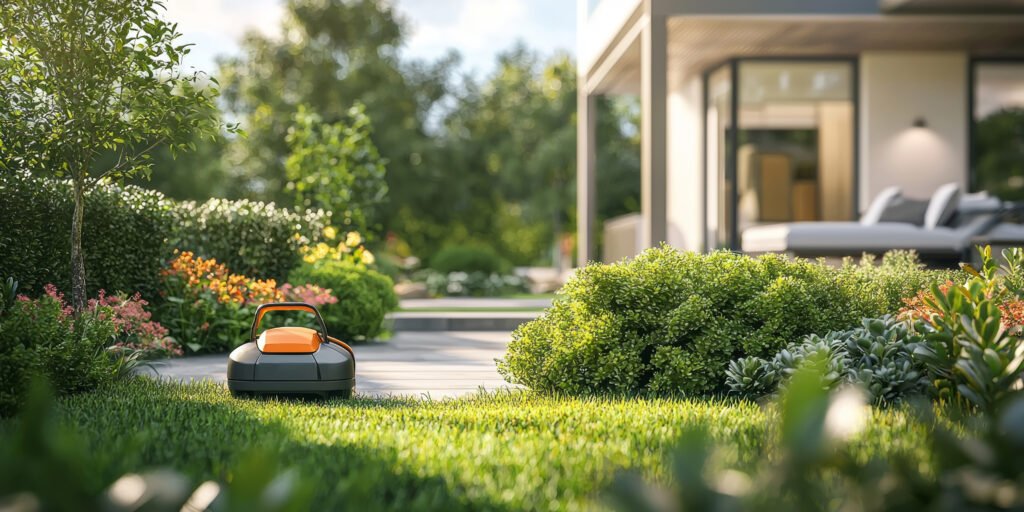
A smaller, smarter natural lawn. Keep real grass where it earns its place a play area for children, a green centrepiece — and convert the rest to planted beds and hardscape. A compact lawn on pop-up sprinklers with a smart controller is entirely sustainable.
Premium artificial grass. Modern artificial turf looks remarkably realistic, uses zero water, and stays perfect through August. It’s the pragmatic choice for busy families and compact plots in communities like JVC and The Springs.
A hybrid approach. Natural grass in the shaded, visible zones; artificial in the hard-wear or brutal-sun zones. Many of our most successful projects blend both.
There’s no single right answer — but there is a right answer for your plot, which is exactly what a proper site visit determines.
Desert Landscaping for Urban Plots
Urban landscaping compact townhouse gardens, courtyards, and rooftop terraces actually suits desert-smart design beautifully. Small spaces amplify every choice: one sculptural agave or a single well-placed frangipani delivers more impact in a courtyard than a dozen plants scattered across a large lawn. Vertical greenery on walls, container planting on drip lines, and light-toned paving turn even the smallest urban plot into a cool green retreat with a water bill to match its size.
5 Mistakes That Kill Dubai Gardens
- Planting for winter. Everything looks great in December. Design for August, and December takes care of itself.
- Overwatering as a cure. Drowning a heat-stressed plant kills it faster. Most “burned” plants are actually suffering root rot from panic watering.
- Ignoring the soil. Dubai’s sandy soil drains instantly and holds few nutrients. Soil improvement and mulching before planting doubles survival rates.
- Afternoon irrigation. Watering at 3pm loses half the water to evaporation and can scorch foliage. Dawn watering, always.
- Copying cold-climate designs. That English cottage border or Japanese moss garden from Pinterest was designed for a different planet. Beautiful Dubai gardens start from Dubai’s palette.
What a Desert-Smart Garden Costs (and Saves)
Desert landscaping isn’t a budget compromise the upfront design and installation costs are comparable to conventional landscaping. The difference shows up afterwards: lower water bills every month, fewer plant replacements every season, and less intensive maintenance year-round. Over a garden’s life, the desert-smart version is almost always the cheaper one and it’s the only version guaranteed to still look good in five years.
Ready for a Garden That Loves Dubai’s Climate?
A green landscape that survives and thrives in Dubai’s heat isn’t about luck or unlimited water. It’s about design: the right plants, precision irrigation, and architecture that creates its own oasis.
That’s what we’ve been building since 2008. Book a free site visit and our team will assess your plot’s sun, soil, and existing planting, then show you exactly how to make it green for good. Call or WhatsApp +971 55 311 9463 your oasis starts with one conversation.