Building a swimming pool is an exciting way to upgrade your property. Whether you want a place to cool off during Dubai’s hot summers, entertain guests, or increase your home’s value, adding a pool can be a worthwhile investment.
However, before construction begins, there’s an important step that many homeowners overlook: obtaining the necessary approvals and permits.
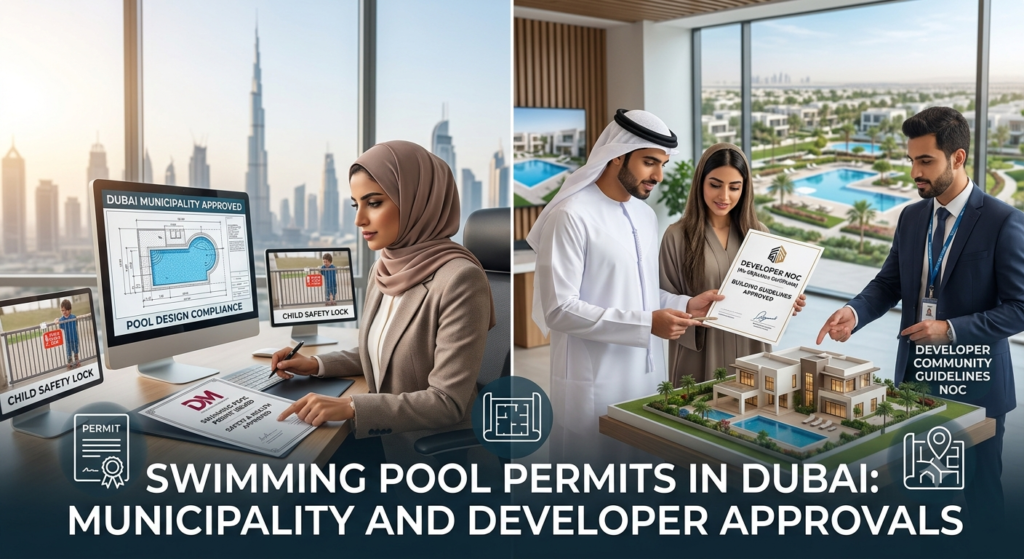
In Dubai, swimming pool construction isn’t simply a matter of hiring a contractor and starting excavation. Depending on your property’s location, you’ll likely need approvals from Dubai Municipality and, in many communities, your developer or master community.
This guide explains the approval process, why permits are required, and what homeowners should expect before construction begins.
Why Are Swimming Pool Permits Required?
Swimming pools involve much more than digging a hole and filling it with water. They require structural engineering, plumbing, electrical systems, drainage, and safety considerations.
Permits help ensure that the pool is:
- Built according to applicable regulations
- Structurally safe
- Properly connected to utility systems
- Installed without affecting neighboring properties
- Compliant with community guidelines where applicable
Obtaining approvals before construction can also help prevent delays, fines, or costly modifications later.
Who Issues Swimming Pool Approvals in Dubai?
Depending on the project, approvals may involve more than one authority.
Dubai Municipality
Dubai Municipality is responsible for regulating many aspects of construction, including ensuring that projects comply with applicable building requirements and safety standards.
For swimming pool projects, approvals may be required before construction can begin.
Community Developers or Master Developers
If your property is located within a master-planned community, you may also need approval from the developer or community management.
Examples include communities developed by companies such as:
- Emaar
- DAMAC
- Nakheel
- Dubai Properties
- Meraas
- Sobha Realty
Each developer may have its own design guidelines, submission requirements, and review process.
What Documents Are Usually Required?
The exact requirements vary depending on the project and location, but contractors or consultants commonly prepare documents such as:
- Swimming pool design drawings
- Site plan
- Structural drawings
- Plumbing layout
- Electrical layout
- Filtration system details
- Equipment specifications
- Contractor information
- Engineering calculations (where required)
Submitting complete and accurate documentation can help avoid unnecessary delays.
What Does the Approval Process Look Like?
Although every project is different, the process generally follows these steps.
Step 1: Design the Pool
Work with an experienced pool designer or contractor to develop a design that suits your property while meeting applicable requirements.
Step 2: Prepare the Drawings
Technical drawings and supporting documents are prepared for submission.
Step 3: Submit for Approvals
The contractor or consultant typically submits the required documents to the relevant authorities and, where applicable, the community developer.
Step 4: Review Process
The submitted documents are reviewed to ensure they comply with applicable regulations and community standards.
If revisions are requested, updated drawings may need to be resubmitted.
Step 5: Approval Issued
Once the required approvals are obtained, construction can begin.
How Long Does the Approval Process Take?
Approval timelines vary depending on several factors, including:
- Project complexity
- Accuracy of submitted documents
- Community requirements
- Review workload
Simple residential projects may move through the process relatively quickly, while more complex designs or incomplete submissions can take longer.
It’s a good idea to discuss expected timelines with your contractor before planning your construction schedule.
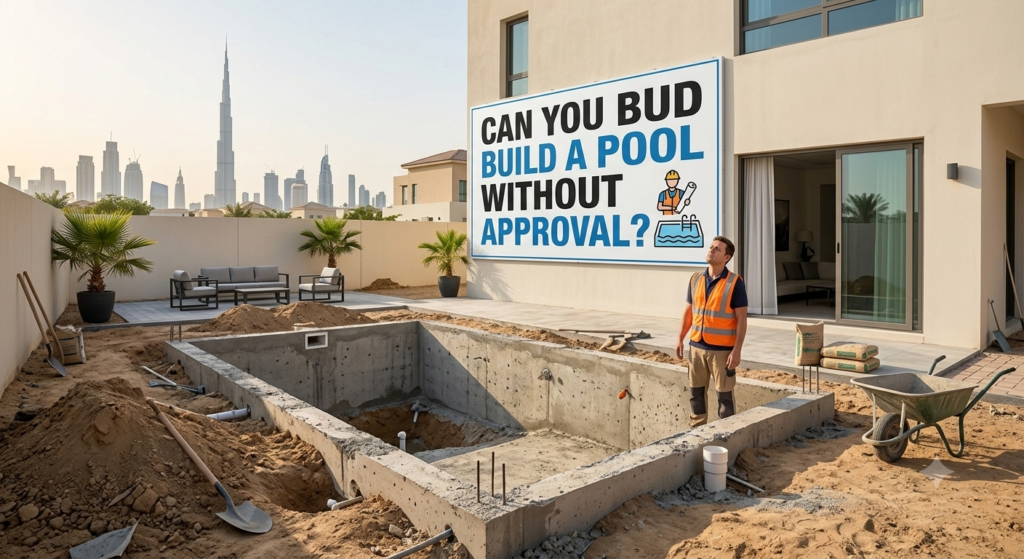
Starting construction without the necessary approvals can create significant complications.
Potential issues may include:
- Work stoppages
- Delays in completing the project
- Requests to modify or remove non-compliant work
- Additional costs to bring the project into compliance
Obtaining approvals before construction begins is generally the safest and most efficient approach.
Choosing the Right Contractor
A reputable swimming pool contractor will usually be familiar with the approval process and can often assist with preparing drawings and coordinating submissions.
When comparing contractors, consider asking:
- Have you completed similar projects in Dubai?
- Will you handle the approval process?
- What is included in your quotation?
- What warranties do you provide?
- Can you provide references or examples of previous work?
Choosing an experienced contractor can make the process much smoother from start to finish.
Why a Pool Inspection Is Still Important
Even after approvals have been obtained and construction is complete, it’s wise to arrange a professional inspection before accepting the finished project.
An inspection can help identify visible issues such as:
- Poor tile installation
- Waterproofing defects
- Uneven finishes
- Plumbing leaks
- Pump and filtration concerns
- Drainage issues
- Safety-related observations
- General workmanship defects
Identifying these issues before final acceptance gives you the opportunity to have them addressed while the contractor is still responsible for the work.
Final Thoughts
Building a swimming pool in Dubai involves more than choosing a design and hiring a contractor. Understanding the approval process can help your project move forward more smoothly and reduce the risk of unexpected delays.
While the exact requirements vary depending on your property’s location and the type of pool you plan to build, working with experienced professionals and securing the necessary approvals before construction begins can save time, money, and unnecessary stress.
Taking the time to plan properly means you’ll be one step closer to enjoying a pool that’s built safely, professionally, and in line with local requirements.